

Welcome! Your account has been created and you are now logged in.
Cities
Nestled in Michigan’s scenic Upper Peninsula, the communities in and around Bay Mills offer a warm blend of small-town charm and rich cultural heritage. Here, life moves at a gentler pace—rooted in deep Indigenous traditions, close ties to nature, and a proud spirit of community. Whether you're exploring the forests or fishing the clear waters of Lake Superior, you’ll find authenticity and a sense of belonging that’s as refreshing as the northern air
Sault Ste Marie, MI (30 minutes from Bay Mills)
Sault Ste. Marie, Michigan, is a city rich in history and culture, located in the Upper Peninsula at the heart of the Great Lakes region. The city lies along the St. Marys River, which connects Lake Superior to Lake Huron and forms part of the U.S.–Canada border. Across the river is Sault Ste. Marie, Ontario.
History
Founding and Age: Sault Ste. Marie is the oldest city in Michigan, founded by French colonists in 1668, making it one of the oldest continuously inhabited European settlements in the United States.
Early Settlement: The area had long been a gathering place for Native Americans before European arrival. The city was initially a single community on both sides of the St. Marys River, but was split by the U.S.–Canada border after 1797.
Growth: The city grew rapidly with the copper and iron ore boom in the 1800s, and especially after the construction of the first American lock in 1855, which became the foundation for the famous Soo Locks.
Attractions and Culture
Soo Locks: The city is famous for the Soo Locks, the busiest canal system in the world, allowing ships to bypass the rapids of the St. Marys River and travel between Lake Superior and the Lower Great Lakes.
The Soo Locks are a critical engineering marvel located on the St. Marys River, connecting Lake Superior to Lake Huron and the lower Great Lakes, and situated between Sault Ste. Marie, Michigan, and Sault Ste. Marie, Ontario.
Historic District: The Sault Ste. Marie Historic Commercial District, listed on the National Register of Historic Places, features over 100 historic buildings with architectural styles ranging from Italianate to Richardsonian Romanesque.
Museums and Landmarks: Notable attractions include the Museum Ship Valley Camp, the Tower of History, the River of History Museum, and historic sites like Fort Brady and several historic churches.
Events: The city hosts cultural events, summer camps with historical and archaeological activities, and seasonal tours of historic waterfront homes.
Sault Ste Marie, Ontario (45 minutes)
Gateway to Lake Superior’s scenic north shore! Sault Ste. Marie, Ontario, is a major city in northern Ontario, Canada, located directly across the St. Marys River from its namesake city in Michigan. Situated on the north shore of the St. Marys River, connecting Lake Superior and Lake Huron, and marking the international border between Canada and the United States.
History
Indigenous Roots: The area has been home to the Ojibwe (Anishinaabe) people for over 500 years, who call it Baawitigong (“place of the rapids”). It was a traditional meeting and trade site long before European arrival.
European Settlement: French Jesuit missionaries established a mission here in the late 17th century, followed by a fur trading post. The city is one of the oldest European settlements in North America, at the crossroads of the historic 3,000-mile fur trade route from Montreal to the north country above Lake Superior.
Industrialization: In the early 1900s, led by industrialist Francis Clergue, Sault Ste. Marie became a regional center for resource development and manufacturing, especially steel and paper.
Attractions
Natural Beauty: Surrounded by old-growth forests, rivers, lakes, and streams, with abundant wildlife and outdoor adventure opportunities.
Cultural Heritage: Rich Indigenous culture, historical sites, and the Sault Ste. Marie Canal National Historic Site.
Recreation: Hub for water sports, scenic train tours, and wilderness expeditions.
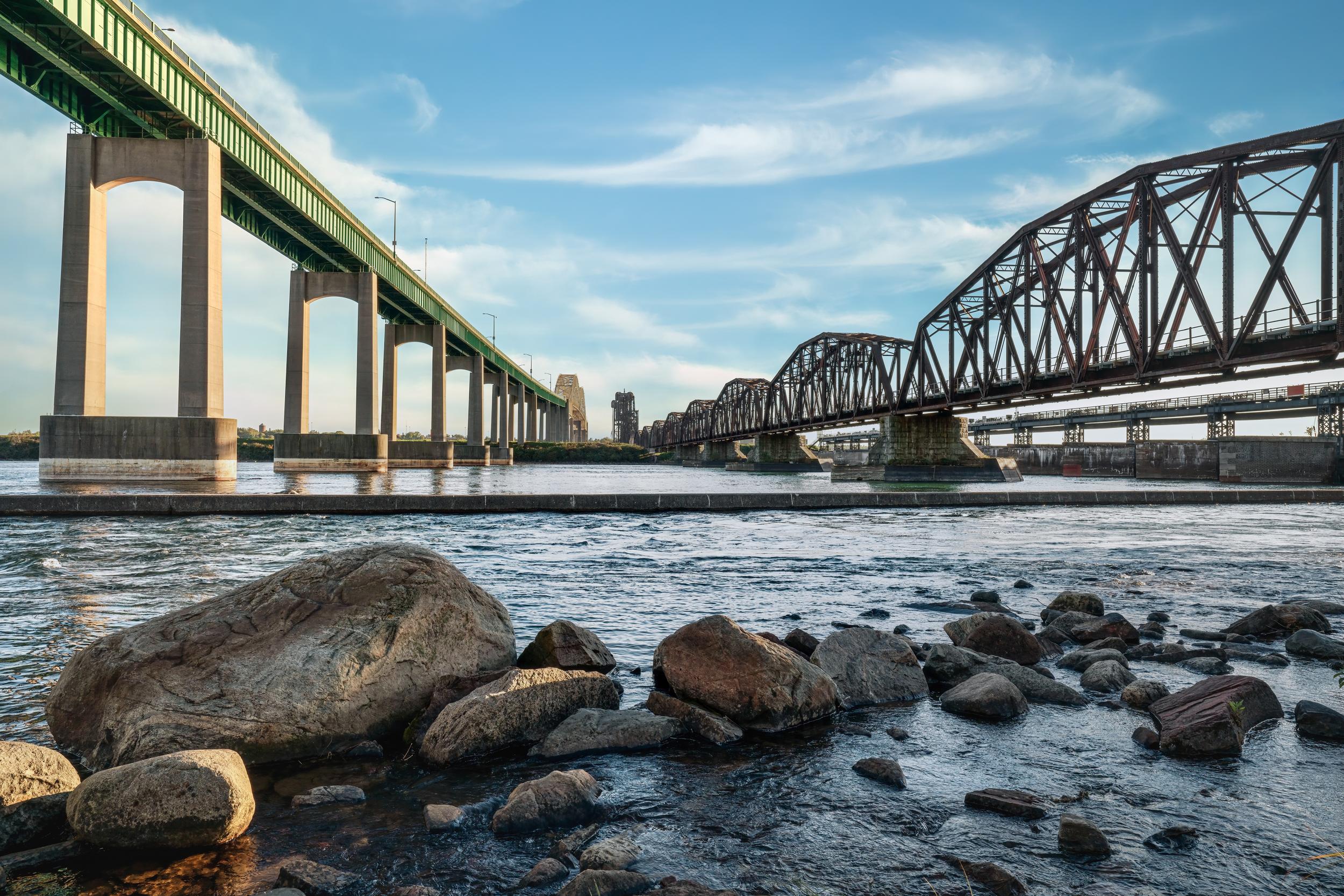
International Bridge: Connects the city to its American twin, Sault Ste. Marie, Michigan.
St. Ignace (45 minutes)
St. Ignace, Michigan, is a historic and picturesque city located in the Upper Peninsula at the northern end of the Mackinac Bridge, directly across the Straits of Mackinac from Mackinaw City. It serves as the gateway to the Upper Peninsula for travelers coming from the Lower Peninsula.
History
Indigenous Roots: The area was inhabited for thousands of years by Native American tribes, including the Wyandot (Huron), Ojibwe, and Ottawa peoples.
European Settlement: In 1671, French Jesuit missionary Jacques Marquette founded the St. Ignace Mission, making it one of the oldest European settlements in Michigan—second only to Sault Ste. Marie.
Fur Trade and Fort de Buade: The mission became a center of fur trading. In 1683, the French built Fort de Buade to protect the trade. Until the founding of Detroit in 1701, St. Ignace was among the largest settlements in New France.
British and American Eras: After the French and Indian War (1763), the British took control, and following the American Revolution, the region became part of the United States.
Incorporation: St. Ignace was incorporated as a village in 1882 and as a city in 1883.
Attractions and Culture
Museum of Ojibwa Culture: Located on the original mission site, this museum offers exhibits on Ojibwa and Huron culture and history, with traditional teachings and events throughout the summer.
Historical Sites: The city preserves its rich history through museums, walking tours, and events that showcase its French, British, and Native American heritage.
Mackinac Bridge: The iconic bridge is a major landmark and engineering marvel, offering stunning views from the city’s waterfront.
Outdoor Activities: St. Ignace is a base for exploring Hiawatha National Forest, boating, fishing, and enjoying the natural beauty of the Straits of Mackinac.
Northern Lights: The city’s northern location provides opportunities to view the aurora borealis, especially away from town lights.
Castle Rock: Castle Rock is a prominent natural landmark and popular tourist attraction located just 3 miles (5 km) north of St. Ignace, Michigan, immediately off Interstate 75 (Exit 348) on the Upper Peninsula side of the Straits of Mackinac.